Security & Smart Access7 min read•January 28, 2026

RFID Frequency Breakdown: 125 kHz Proximity vs 13.56 MHz Mifare 1K & NFC

A technical comparison of legacy low-frequency turnstiles versus high-frequency encrypted contactless smart cards for automated campus attendance.

PJD
Pranab Jyoti Das
Head of Credential Engineering, IDGen
Back to All Blogs
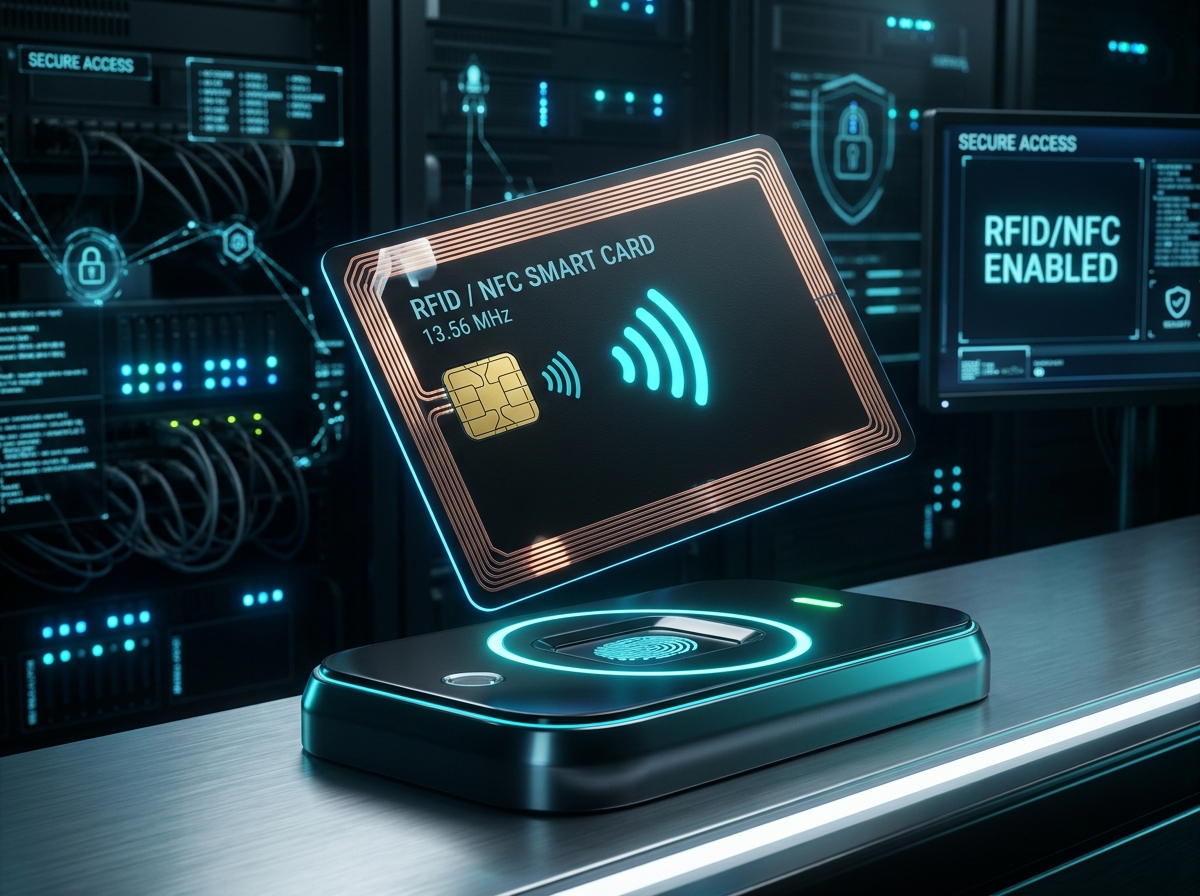
Contactless RFID smart cards 13.56MHz and 125kHz coil inlays
Automating attendance and turnstile access is now standard practice across Northeast colleges and commercial facilities. However, selecting the incorrect RFID chip standard results in expensive project failures where cards refuse to register on newly installed biometric door readers.
Executive Summary & Takeaways
  • ✓125 kHz cards broadcast a static unencrypted facility ID, making them prone to hand-held cloner devices.
  • ✓13.56 MHz Mifare 1K smart cards support read/write data storage and cryptographic handshakes.
  • ✓Dual-frequency inlays house both copper coils in one card, enabling phased campus reader upgrades.
  • ✓Always scan reader specifications or request sample chip verification from IDGen prior to bulk printing.

1. How Contactless RFID Cards Actually Work

Contactless identity cards contain no batteries. They derive power electromagnetically when held within the reader's radio-frequency field.

An embedded copper wire loop antenna resonates, powering the microchip to transmit its programmed credential token back to the turnstile controller in milliseconds.

2. 125 kHz Low Frequency (LF) Proximity Cards

Low-frequency technology (typically EM4100, TK4100, or HID Prox) uses a large wound wire coil operating at 125 kHz.

While reliable for basic employee punch clocks, LF cards broadcast their serial number in open, unencrypted text. Cheap pocket-sized RFID duplicators can clone these cards in under two seconds.

3. 13.56 MHz High Frequency (HF) Mifare & NFC

High-frequency technology (Mifare Classic 1K, NTAG213, Desfire) operates at 13.56 MHz under ISO/IEC 14443 Type A protocols.

Mifare chips feature 1,024 bytes of organized memory segmented into 16 distinct sectors, each protected by dual 48-bit encryption keys. Beyond door access, they can store student library credits, cafeteria balances, and encrypted transport passes.

Future-Proofing Note

NFC-enabled smartphones can interact natively with 13.56 MHz NTAG credentials, enabling instant URL redirection or digital student verification on mobile devices.

4. The Hybrid Bridge: Dual-Frequency Inlays

Institutions often face a migration challenge: the older hostel gates operate on 125 kHz, while the new library turnstiles require 13.56 MHz Mifare.

IDGen manufactures dual-frequency smart cards featuring both antennas isolated inside a single CR80 PVC housing, enabling seamless single-card access across legacy and modern readers.

5. Verification Checklist Before Ordering

Confirm the following 5 parameters with your software team before ordering:

1. Operating Frequency: 125 kHz or 13.56 MHz?

2. Specific Chipset: Mifare Classic, Ultralight, EM4100, or NTAG?

3. Output Format: 26-Bit Wiegand, 34-Bit, or Raw Chip UID?

4. Encoding: Do you require matching printed barcodes / laser serial numbers?

5. Batch Test: Request a 5-card test sample from IDGen to validate turnstiles.

Related Topic Tags
#RFID 125kHz#Mifare 1K#NFC Turnstiles#Access Control#Contactless
PJD
Published By Credential Specialist
Pranab Jyoti Das
Head of Credential Engineering, IDGen

Oversees cleanroom variable-data production, ultrasonic lanyard fabrication, and automated RFID access testing for schools, universities, and enterprise workforces across Northeast India.

Continue Reading

Related Technical Insights

Have an upcoming campus or corporate identity requirement?

From student ID cards and ultrasonic lanyards to 13.56 MHz RFID turnstiles, get direct factory quotes and custom digital proofs tailored to your roster.

WhatsAppCall Now