

A Cleaner Way to Attach Lanyards to ID Card Holders
IDGen provides ultrasonic sealing for ID card lanyard attachments, creating a finished connection between the lanyard and the required attachment configuration. Ultrasonic sealing can be used with suitable hooks and lanyard assemblies where a cleaner, more finished attachment is required.
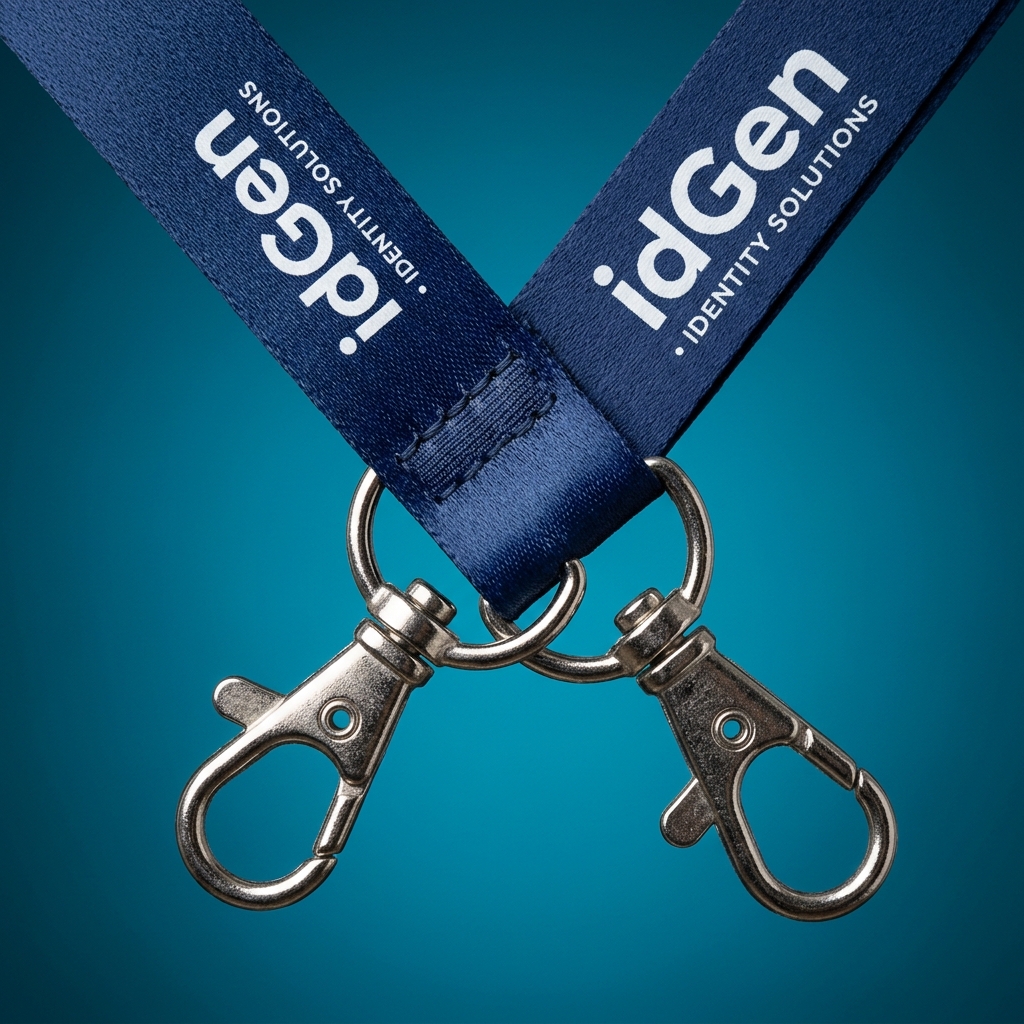
Instead of relying only on a conventional exposed metal attachment, ultrasonic sealing creates an integrated finished lanyard assembly:

Organizational Applications
It is particularly useful for organizations ordering:
Technology Definition
What Is Ultrasonic Sealing?
Ultrasonic sealing uses high-frequency mechanical vibration to join compatible materials through localized heat generated at the joining area. For ID card lanyard applications, the process can be used to secure the lanyard and attachment arrangement into a finished assembly.
The exact sealing method depends on:
The objective is to create a cleaner and more finished lanyard attachment.
Key Benefits
Why Use Ultrasonic Sealing?
Traditional lanyard assemblies can use exposed metal attachment components. Ultrasonic sealing provides an alternative attachment method that reduces dependence on exposed metal attachment points in suitable configurations.
Depending on the design and environment, exposed metal hardware may:
A More Finished Appearance
The sealed connection can create a cleaner-looking transition between the lanyard and attachment.
Reduced Exposure to Sharp Metal Parts
Where the selected configuration allows it, ultrasonic sealing can reduce the amount of exposed metal hardware around the attachment area.
Better Long-Term Appearance
Because the attachment can be integrated into the lanyard assembly, it can avoid some of the appearance issues associated with exposed metal hardware.
Specification Matrix
Ultrasonic Sealing vs Conventional Metal Attachment
| Feature | Conventional Exposed Metal Attachment | Ultrasonic Sealing |
|---|---|---|
| Lanyard attachment | Metal hardware | Sealed attachment configuration |
| Exposed metal | Depends on design | Can be reduced |
| Sharp exposed edges | Possible | Can be reduced in suitable designs |
| Rust/corrosion appearance | Possible with exposed metal | Reduced where exposed metal is eliminated/reduced |
| Appearance | Conventional | Cleaner, integrated appearance |
| Suitable for bulk ID projects | Yes | Yes |
| Configuration | Depends on hardware | Depends on lanyard/material/attachment |
The right method depends on the customer's product design and required attachment configuration.
Wearable Integration
Ultrasonic Sealing for ID Card Lanyards
Ultrasonic sealing is primarily relevant to the lanyard attachment stage of an identification setup.
The exact assembly depends on the selected components.
Sealing Points
One Hook vs Two Hook Sealing
The number of ultrasonic sealing points depends on the attachment configuration.
1 Hook + 1 Ultrasonic Sealing Point
For a lanyard using one hook, the required attachment can use 1 sealing point.
2 Hooks + 2 Ultrasonic Sealing Points
Some applications use two hooks with the lanyard, requiring 2 sealing points.
The final configuration should be confirmed according to the actual lanyard and card design.
Event Accreditation
Ultrasonic Sealing for Event Cards
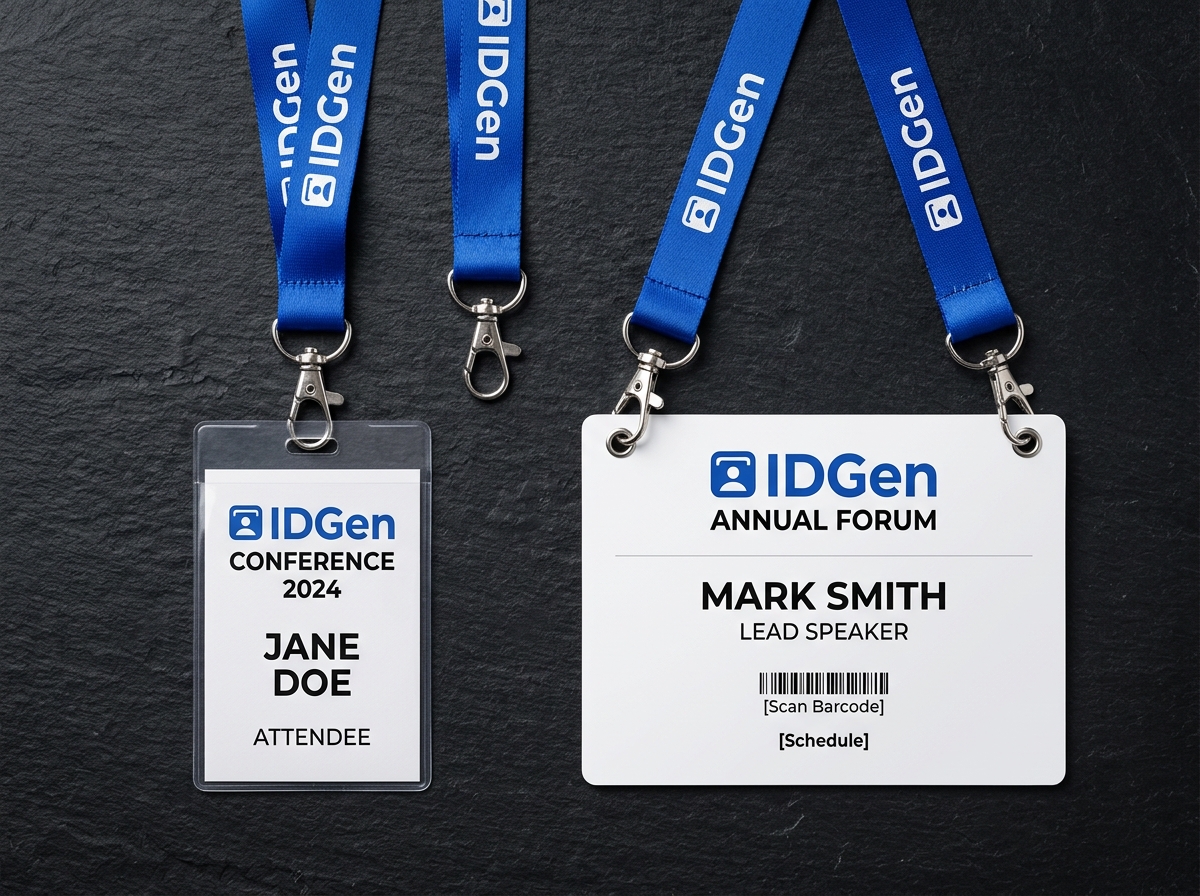
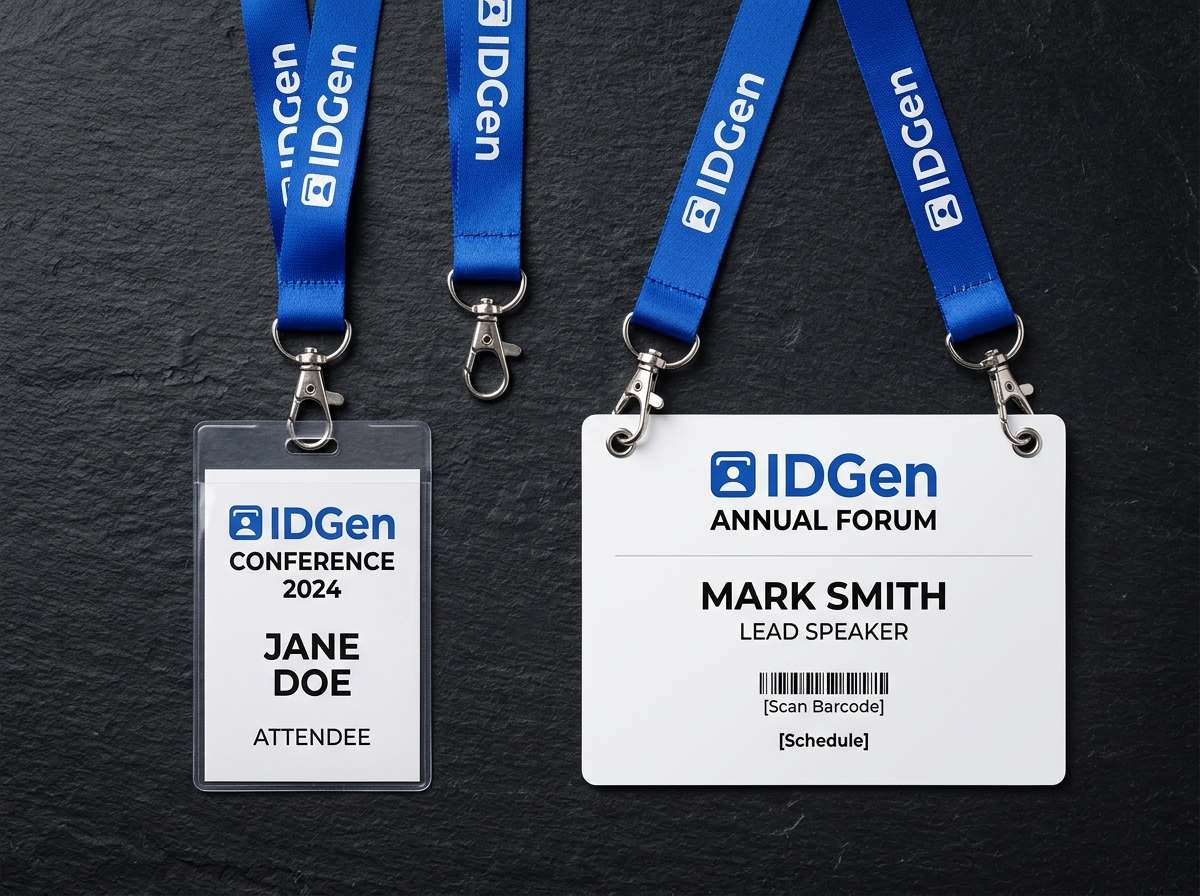
Event identification can use different attachment configurations. Some event cards use Event Card + Lanyard + 1 Hook, while others use Event Card + Lanyard + 2 Hooks.
One Hook
1 Hook → 1 Sealing Point
Two Hooks
2 Hooks → 2 Sealing Points
This is why ultrasonic sealing should be quoted based on the complete event-card attachment configuration, rather than simply quoting one generic sealing charge.
Coordinated Sets
Ultrasonic Sealing for Complete ID Card Sets
Organizations can combine ultrasonic sealing with other identification components. This allows customers to order the required identification components as one coordinated setup.
Standard Wearable Set
Sealed Wearable Set
Complete Branded Identification Set
Ultrasonic Sealing for Schools
Schools can use sealed lanyard assemblies for:
The exact attachment configuration depends on the selected holder, hook and lanyard.
Explore Student ID Card PrintingUltrasonic Sealing for Companies
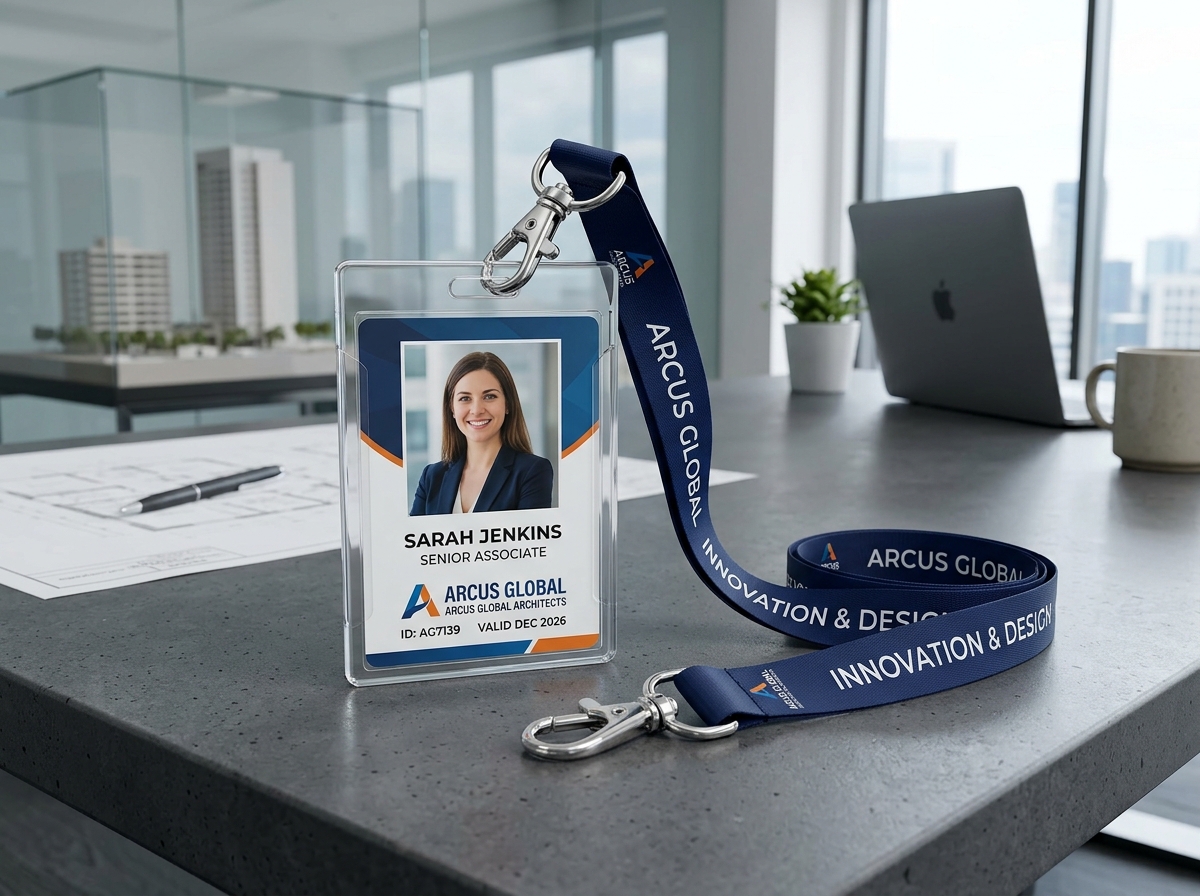
Companies can use ultrasonic-sealed lanyard assemblies for:
Workflow Steps
Ultrasonic Sealing Process
01 - Select the Configuration
Confirm: Lanyard, Hook, Holder (if required), Number of hooks, Sealing requirement.
02 - Confirm Materials
The lanyard and attachment materials are checked for suitability.
03 - Prepare the Assembly
The lanyard and attachment are positioned according to the required configuration.
04 - Ultrasonic Sealing
The appropriate sealing process is applied to create the required attachment.
05 - Inspection
The finished attachment is checked for: Position, Appearance, Attachment quality, Required configuration.
06 - Complete Assembly
The sealed lanyard is combined with the required identification components.
07 - Final Quality Check
The completed identification setup is checked before packaging and dispatch.
Quality Standards
Quality Matters in Lanyard Sealing
A sealed lanyard should not only look good. The finished assembly should also be checked for:
For bulk orders, consistency across the batch is particularly important.
Pricing Logic
Ultrasonic Sealing Price
The cost of ultrasonic sealing depends on the required configuration. Factors can include: Number of sealing points, Number of hooks, Lanyard type, Attachment configuration, Quantity, Complete-set requirement.
1 Hook → 1 Sealing Point
2 Hooks → 2 Sealing Points
The final price should therefore be calculated according to the actual configuration rather than assuming the same sealing quantity for every order.
Attachment Variations
Complete Lanyard Attachment Options
Customers can choose the attachment configuration according to their application.
Option 1 - Conventional Attachment
Standard hardware loop assembly with conventional metal fastener.
Option 2 - Single Ultrasonic Sealing
Standard single hook lanyard with integrated acoustic fused weld.
Option 3 - Two-Hook Ultrasonic Configuration
Dual corner hook lanyard for wide conference badges with two acoustic welds.
Option 4 - Complete ID Card Assembly
Complete pre-assembled identification set ready for institutional distribution.
The recommended configuration depends on the card, holder, lanyard and application.
Engineering Rationale
Why IDGen Uses Ultrasonic Sealing
IDGen uses ultrasonic sealing as an attachment option because it can provide a cleaner and more integrated alternative to certain exposed metal attachment arrangements.
Cleaner Appearance
Creates a seamless, refined bond between fabric ribbon and hook hardware.
Reduced Exposure to Metal Hardware
Eliminates bulky metal crimps and exposed sharp wire staples.
Reduced Risk of Sharp Edges
Skin-friendly smooth finish that will not scratch necks or catch on clothing.
Better Visual Integration
Attachment blends cleanly into the custom printed satin lanyard strap.
Suitable for Bulk ID Projects
High-speed automated factory consistency across thousands of badge units.
Consistent Attachment Configuration
Standardized loop tension and weld placement across entire institutional orders.
The final result depends on the selected materials, equipment and assembly design.
Target Audiences
Who Can Order Ultrasonic Sealing?
Ultrasonic sealing can be useful for organizations ordering:
It is especially relevant when the customer wants a finished lanyard attachment rather than a loose lanyard and separate hardware.
Questions & Answers
Frequently Asked Questions
- Ultrasonic sealing is a joining process that uses high-frequency mechanical vibration to create a sealed attachment between compatible materials in a lanyard assembly.
- Yes. IDGen uses ultrasonic sealing as an attachment option for suitable lanyard and hook configurations.
- It can provide a cleaner and more integrated attachment and can reduce exposed metal hardware in suitable configurations. The best method depends on the lanyard and attachment design.
- Exposed metal hardware can develop corrosion or surface deterioration depending on the metal, coating, environment and usage. Ultrasonic sealing can reduce exposed metal in suitable attachment configurations.
- It can reduce exposure to certain metal attachment components where the design allows it, but the final configuration depends on the selected hook and lanyard.
- A one-hook configuration generally requires one sealing point.
- A two-hook configuration generally requires two sealing points.
- Yes. Event cards can use ultrasonic sealing when the selected lanyard and hook configuration is suitable.
- Yes. A complete setup can include: ID Card + Holder + Hook + Ultrasonic Sealing + Lanyard.
- Yes. They can be used with suitable student, teacher and staff identification configurations.
- Yes. They can be used for suitable employee and organizational identification applications.
- No. Ultrasonic sealing is an attachment/assembly method. It does not replace a holder when a holder is required.
Need Ultrasonic Sealing?
Tell us: Number of ID cards, Lanyard type, Number of hooks, Holder requirement, One- or two-hook configuration, and whether you need the complete ID card set. We can then determine the appropriate sealing and assembly configuration.
Ultrasonic Sealing & Lanyard Assembly in Guwahati, Assam & Northeast India
IDGen provides automated ultrasonic sealing for school lanyards, employee credentials, and event badge attachments across Guwahati, Assam, and all 8 Northeast states.